


Safety Squat Bar
SAFETY SQUAT BAR – Chrome plated barbell with hard chrome sleeves + non-slip knurling – 2 ball bearings and 2 bronze bushings – 30 mm grip – 21 kg weight, 320 kg max load. – neck and shoulder protection pads included.
€ 209
IVA inclusa
Shop with confidence
All payment methods are secure and protected by SSL bank-grade encryption
Payment methods
Ritiro gratuito presso la nostra sede
Puoi ritirare questo prodotto direttamente presso la nostra sede
Teknofitness di Fano (PU), senza costi di spedizione.
Attendi la nostra conferma prima di recarti in sede: ti avviseremo quando
il prodotto sarà pronto per il ritiro.

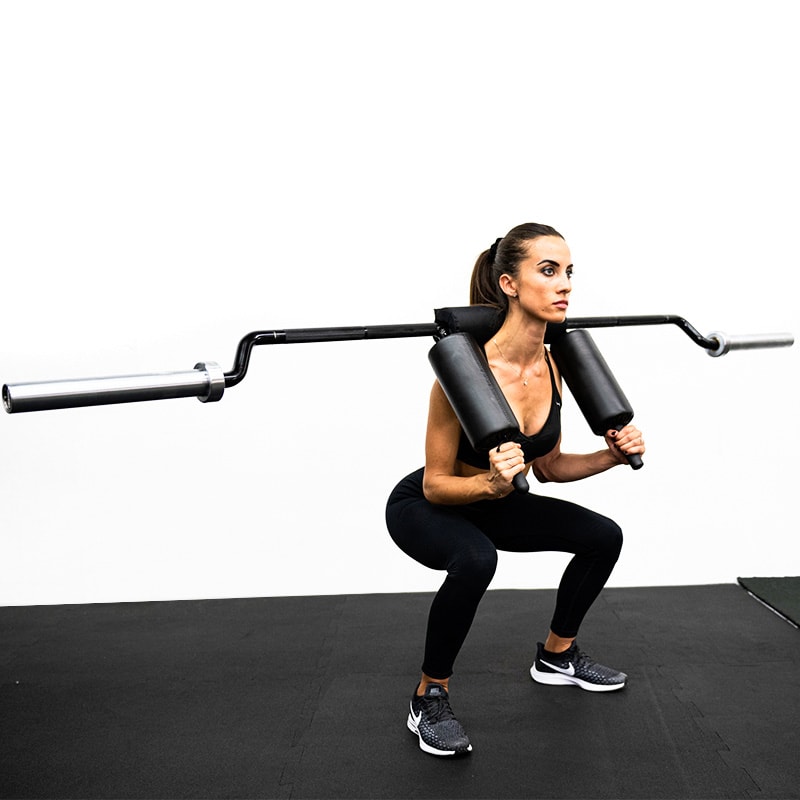
Three elements mainly characterize the Safety Squat Barbell:
- The hand grips, made from tubes welded to the barbell and rubberized at the ends
- Ample padding, also placed on the tubes for the hands, serving as shoulder pads
- Load adapters offset by 10 cm from the barbell.
The objective of the Safety Squat Barbell is to reduce some critical issues in a complex exercise like the free barbell squat with high loads. Among these is the widespread difficulty of correctly positioning the barbell on the back due to limited shoulder mobility caused by injuries or individual physical specificities. The presence of hand grips makes it possible to position and stabilize the barbell, preventing limited joint mobility of the shoulders and shoulder blades from generating high tensions in the back, leading to pain and incorrect postures, which would negatively impact the exercise, reducing its effectiveness and increasing the risk of injuries. The presence of ample padding acting as shoulder pads, combined with the grips, creates a larger body-barbell contact area, leading to a better perception of the barbell itself and consequently better load control, especially with high loads. Load control is fundamental in squatting because it is a prerequisite for correct exercise execution, starting from finding the weight's centrality in relation to the body, or rather, in relation to the foot.
Questions?
Read the most common ones below, and if you still have doubts, contact us by phone, email, or WhatsApp.