
Treadmill incline: the right percentages for you

Do you want to burn more calories, improve endurance, or train like you're on a real uphill trail? The answer depends on your goal, but there are precise ranges to set right away. For natural walking, 0-1% incline is enough to compensate for the absence of air resistance and make your stride similar to outdoor running. To lose weight and increase energy expenditure, moderate inclines are needed, while flat running stays at 1%, and uphill power requires higher values.
Here's a quick overview before you read on:
- 0-1%: walking and running that simulate the absence of wind and a flat road surface.
- 1-3%: light uphill walking, ideal for beginners or those recovering from injury.
- from a few percentage points to moderate levels: training for weight loss and endurance, with higher calorie expenditure at the same speed.
- high values: power and strength work, typical of hill training or expert finishers.
A tip: If you don't know where to start, set the treadmill to 1% for every walk or flat run: this is the percentage most cited by experts to make indoor training comparable to road training.
Key points
| Point | Details |
|---|---|
| Range per goal | Use 0-1% for outdoor running, 1-3% for uphill walking, 3-6% for weight loss, over 6% for power. |
| 12-3-30 Method | Walk for 30 minutes at 12% incline and 3 km/h for an effective low-impact workout. |
| Gradual progression | Increase incline by 1% at a time and change only one variable per session. |
| Safety first | Immediately reduce incline or speed in case of pain, dizziness, or loss of balance. |
| Suitable equipment | Teknofitness offers treadmills, heart rate monitors, and technical assistance for safe uphill training at home. |
Table of Contents
- Why use incline: main benefits for training and weight loss
- Ideal settings based on goals: walking, weight loss, running, power
- Practical examples: step-by-step workouts for every level
- Correct technique and precautions to observe
- How to progress: practical rules and advancement plan
- What "incline percentage" means on the treadmill
- What science says about incline, VO2max, and performance
- Practical experience: how to use incline at home
- Practical summary: what to remember about treadmill incline
- Find the right treadmill and accessories for uphill training
- Frequently asked questions about treadmill incline
- Sources
Why use incline: main benefits for training and weight loss
Adding incline to the treadmill is not an aesthetic detail of your training program: it changes the physiology of the effort. At the same speed, walking or running uphill requires more energy, which translates into higher calorie consumption compared to flat ground. Some technical studies indicate that a well-structured incline workout can even halve the time needed to achieve the same energy expenditure as a flat session.
The benefits don't stop at burning calories. Incline more significantly activates the glutes, quadriceps, and calves, muscles that work much less in flat walking. This makes incline training useful not only for weight loss but also for those looking to tone the lower body.
Then there's the cardiovascular aspect. Uphill climbing stimulates the aerobic system similarly to mountain running, and this type of effort is associated with an improvement in VO2max, the indicator that measures how much oxygen the body can use during exercise. The higher the VO2max, the greater the ability to sustain intense efforts without quickly fatiguing.
An often-underestimated advantage concerns the joints. Increasing the incline allows you to raise your heart rate without having to run faster, thus reducing the impact on knees and ankles: a valuable strategy for those suffering from joint pain or returning to training after a break.
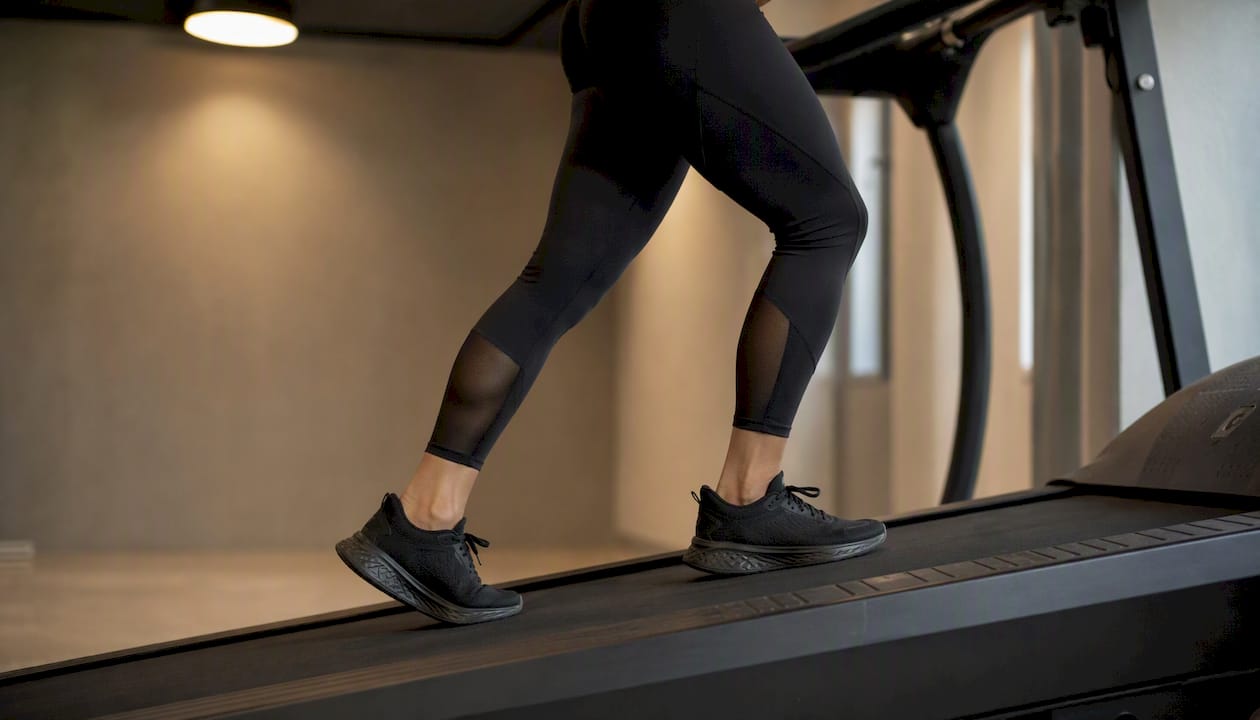
A tip: If you have knee discomfort but want to maintain intensity, raise the incline to 4-5% and reduce your speed by 0.5-1 km/h. Your heart rate will stay high, and the impact on the ground will decrease.
Ideal settings based on goals: walking, weight loss, running, power
There is no single correct incline: it depends on what you are trying to achieve. Here's how to orient yourself with concrete numbers, designed for those who train at home and want to progress without risking injury.
| Goal | Incline | Indicative speed | Typical duration |
|---|---|---|---|
| Simulate outdoor running | 1% | 8 km/h | 20 minutes |
| Light uphill walking | 1-3% | 4-6 km/h | 30 minutes |
| Weight loss and endurance | 3-6% | 5-7 km/h | 25 minutes |
| Uphill power and strength | over 6% | 3-5 km/h | 10-20 minutes (in intervals) |
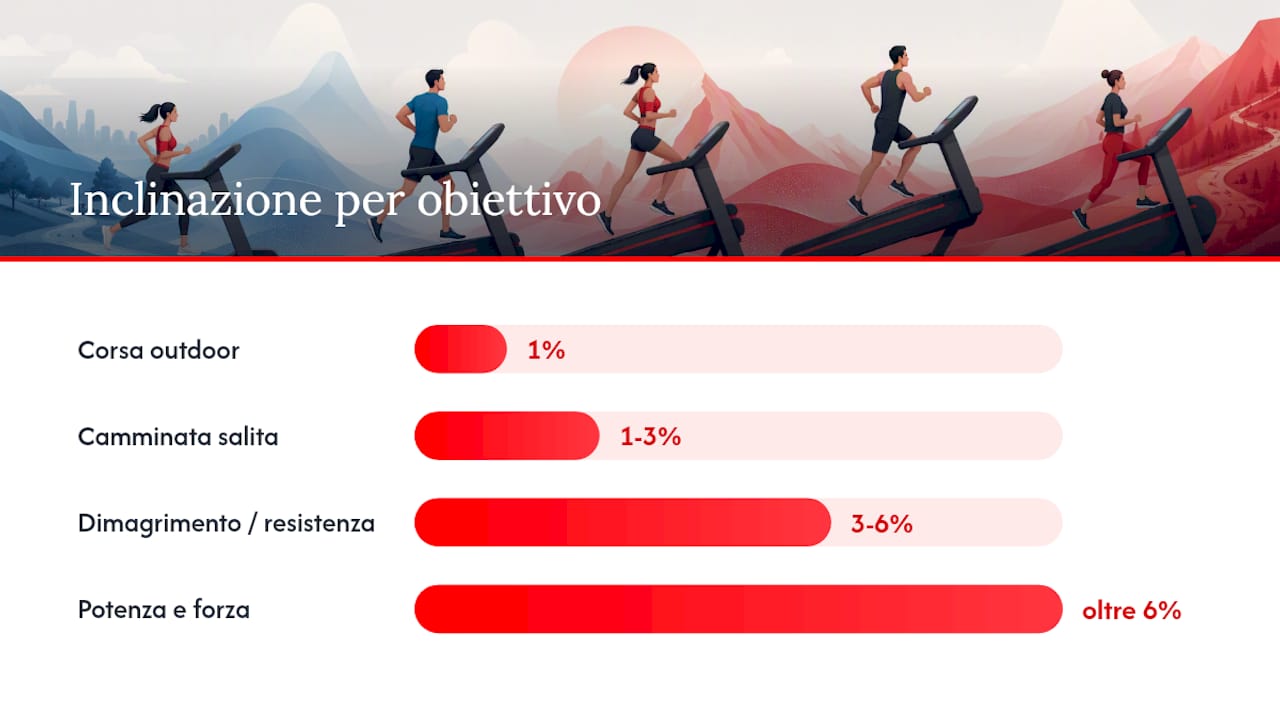
The 1-3% range is the most suitable for beginners: the perceived effort increases slightly, but muscle work already grows significantly. Moving up to 3-6% puts you in the most effective zone for weight loss, as it combines high calorie expenditure with still manageable joint impact.
Beyond 6%, the nature of the workout changes: it becomes more strength work than pure cardiovascular endurance. At these inclines, the speed almost always drops below 5 km/h, because the muscular load required is very high even at a slow pace.
If you experience instability, knee pain, or excessive fatigue compared to what was expected, immediately reduce the incline by 1-2 percentage points before adjusting the speed: it is the easiest variable to correct on the fly.
Practical examples: step-by-step workouts for every level
Having a percentage range is useful, but translating it into a concrete workout makes the difference between theory and results. Here are three ready-to-use plans, organized by level.
1. Beginner workout
- Warm-up: 5 minutes at 0-1% incline, moderate pace.
- Main block: 3 repetitions of 3 minutes at 3% incline, at about 75% of perceived maximum effort, followed by 2 minutes of flat recovery.
- Cool-down: 5 minutes at 0% with a slow pace.
This scheme follows the logic proposed by Brooks Running, which indicates 3% as the ideal starting point for those who want to introduce incline without overloading their legs.
2. Weight loss workout with the 12-3-30 method
This is an almost entirely muscular and cardiovascular workout, with very limited joint impact because the pace remains slow.
This format works both the aerobic system and leg strength.
3. Advanced power workout
- Warm-up: 8 minutes at 1-2%.
- Interval block: 5 repetitions of 2 minutes at 8-10% incline, speed 4-5 km/h, with 90 seconds of active recovery at 1% between repetitions.
- Cool-down: 6-8 minutes at 0-1%.
A tip: Always record the speed and incline used in each session: this allows you to understand if you are truly progressing or if you are simply repeating the same effort.
Correct technique and precautions to observe
Incline changes the biomechanics of your stride, which requires attention to posture and behavior during your workout. Some rules apply to all levels.
- Always warm up for at least 5 minutes at a low incline (0-1%) before increasing the incline.
- Do not hold the handrails tightly: it slows your pace, alters your posture, and reduces actual muscle work.
- Keep your torso slightly tilted forward, without arching your back.
- Monitor your breathing and heart rate, especially above 6% incline.
- Reduce incline or speed immediately if you feel joint pain, dizziness, or loss of balance.
| Signal | What to do |
|---|---|
| Knee or hip pain | Reduce the incline by 2 percentage points and slow your pace |
| Dizziness or excessive shortness of breath | Return the treadmill to 0% and walk on a flat surface until you stabilize |
| Difficulty maintaining balance | Immediately reduce speed before adjusting incline |
| Heart rate too high for effort level | Stop the high incline block and move to recovery |
How to progress: practical rules and advancement plan
The most important principle in incline progression is simple: change only one variable at a time. If you increase the incline, maintain the same speed as the previous session. If you want to run faster, leave the incline unchanged. This rule, shared by several industry experts, reduces the risk of overuse injuries.
The body needs time to adapt muscles and tendons to the new load, especially in the calves and Achilles tendon.
A simple weekly plan for beginners could be:
- Week 1-2: walk at 1-2% incline, 3 sessions of 30 minutes.
- Week 3-4: increase to 3% incline, maintaining the same duration.
- Week 5-6: introduce intervals at 5% for 2 minutes, alternated with flat recovery.
- Week 7-8: evaluate using RPE (rating of perceived exertion scale from 1 to 10) or heart rate, to decide whether to go above 6%.
What "incline percentage" means on the treadmill
The incline percentage indicates the ratio between the height gained and the horizontal distance covered: 5% means climbing 5 meters for every 100 meters covered, a value comparable to a real uphill climb.
| Incline (%) | Approximate angle | Perceived effort |
|---|---|---|
| 1% | 0.5° | Minimal, almost imperceptible |
| 3% | 1° | Slight increase in muscle work |
| 6% | 3° | Moderate effort, similar to a gentle hill |
| 10% | 5° | High effort, typical of steep trails |
Setting 1% partially compensates for this difference, making the indoor effort more similar to the real one.
On the machine's display, the percentage is almost always adjusted with dedicated buttons or through pre-set programs. Before starting, always check that the speed and incline are consistent with the session's goal: increasing both together, especially for beginners, is the most common cause of early fatigue.
What science says about incline, VO2max, and performance
The available evidence converges on some key points. Incline training increases calorie expenditure compared to flat ground, stimulates glutes and the posterior chain more, and is associated with an improvement in VO2max if practiced consistently.
- A well-structured incline workout can significantly reduce the time needed to achieve the same caloric expenditure as a flat session.
- An incline of 5% is comparable to a real hill climb, with superior muscular benefits to flat walking.
- Sessions with 12-20 minutes of intense cardiovascular work on an incline represent an effective format for those who want to optimize their training time.
Uphill treadmill climbing stimulates the cardiovascular system similarly to mountain running, a mechanism that trains the body to use oxygen more efficiently during exertion.
This type of work, if regularly incorporated into the routine, produces measurable physiological adaptations over time, not just in a single session. Those seeking concrete results in weight loss or endurance should consider incline as a structural part of the program, not as an occasional variation.
Practical experience: how to use incline at home
Training with incline at home requires a few more precautions than at the gym. The floor, the stability of the treadmill, and the right accessories make the difference between a safe and a frustrating session.
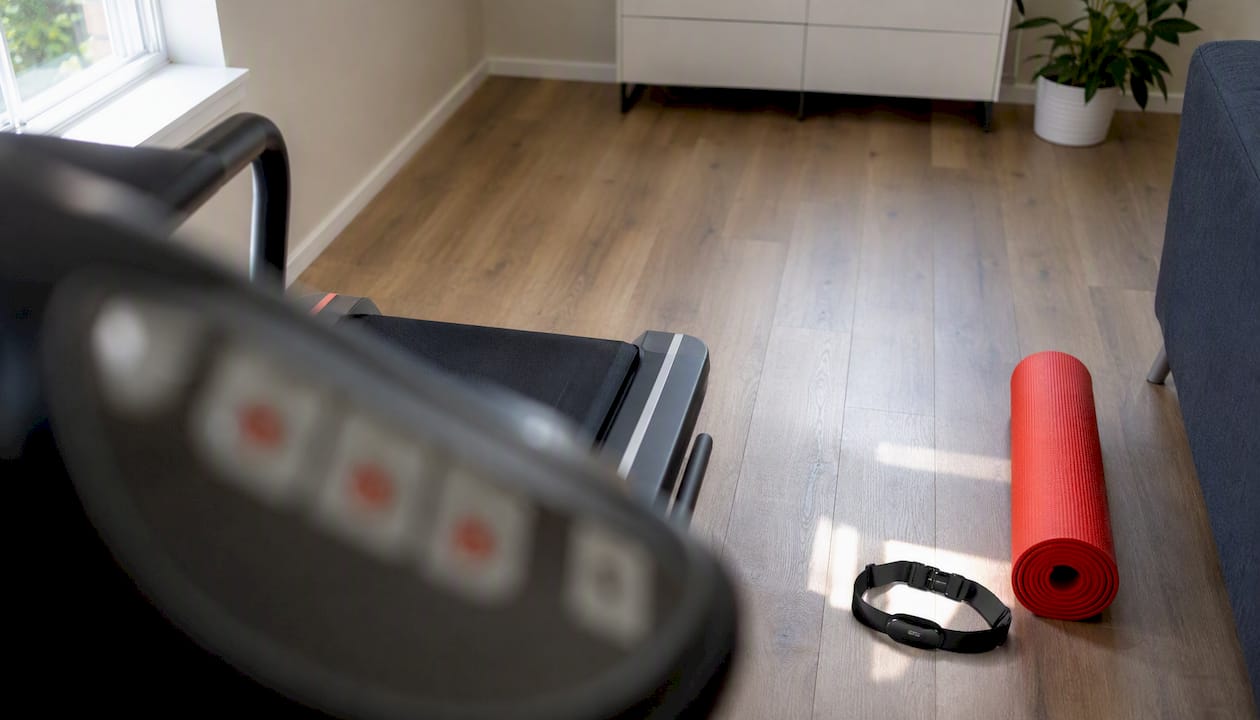
A wireless heart rate monitor, on the other hand, allows you to monitor your heart rate in real-time during incline blocks, so you can decide whether to drop a percentage point before fatigue becomes excessive.
In a home setting, it's advisable to place the treadmill away from walls and furniture, with at least one meter of clear space behind the machine: this is the minimum safe distance in case of loss of balance during a high-incline block. Regarding timings, incline sessions require more mental energy than flat walking, so they work best during hours when you are more alert, not at the end of the day after a strenuous work.
Those purchasing a new treadmill should also check the available after-sales services: professional assembly and technical assistance make a difference when the machine requires adjustments or maintenance over time, especially if used frequently at high inclines, which stress the motor and belt more than simple flat walking.
Practical Summary: What to Remember About Treadmill Incline
- Use 0-1% to simulate outdoor running, 1-3% for light uphill walking, 3-6% for weight loss and endurance, over 6% for power and strength.
- Increase the incline by 1% at a time and change only one variable per session, allowing 2-4 weeks for adaptation.
- The 12-3-30 method (12% incline, 3 km/h, 30 minutes) remains an effective and low-impact format for weight loss.
- Immediately reduce incline or speed if you experience pain, dizziness, or loss of balance.
- Do not hold the handrails during uphill intervals: it alters posture and reduces real muscle work.
- Try one of the suggested workouts this week and monitor your response with RPE or heart rate before further increasing the load.
Find the Right Treadmill and Accessories for Incline Training
Teknofitness is the go-to for those who want to train on an incline at home without compromising on real technical advice: no external call centers, just direct support from those who know the products because they manage them from their own warehouse.
If you are considering a treadmill capable of handling frequent workouts at high inclines, Teknofitness's buying guide helps you compare technical features before choosing. For those who already have a machine and want to optimize its daily use, the tips for correct use complement what was covered in the technical section of this article.
To precisely monitor your effort during uphill blocks, a wireless heart rate monitor allows you to read your heart rate in real-time and understand when it's time to drop a percentage point. With over a thousand positive reviews and support that also covers assembly and repair, Teknofitness accompanies you from product selection to daily workout management. Visit the catalog and find the treadmill best suited to your incline routine.
Frequently Asked Questions About Treadmill Incline
What is the ideal incline for losing weight on a treadmill?
Because it compensates for the lack of air resistance found outdoors, making the effort on the treadmill more similar to that of a road run.
What is the 12-3-30 method and does it really work? It is an effective format for weight loss and endurance, with low joint impact thanks to the slow pace.
How often can I increase the incline?
Is a high incline bad for the knees? If managed correctly, a moderate incline reduces impact compared to fast running on a flat surface, because it allows you to raise your heart rate at lower speeds.
The information contained in this article is for general purposes only and does not replace the advice of a doctor or qualified fitness professional, especially in the presence of joint or cardiovascular conditions.
Sources
- Incline Treadmill Workouts and Benefits | Brooks Running
- The Whole Truth About Treadmill Running | Runnea
- Increase intensity with incline workouts | TRUE Fitness