
How to choose the right exercise bike for your home workout

The right exercise bike depends on three variables: training goal, available space, and postural comfort. If you want immediate guidance, here are the verdicts for the most common situations:
- Beginner or general use: upright exercise bike with magnetic resistance, flywheel of at least 8 kg, adjustable saddle.
- Lower back problems or rehabilitation: recumbent exercise bike, which offers lumbar support and a reclined posture.
- Weight loss and moderate cardio: upright or recumbent with interval programs, combined with dietary control.
- Intensive training or cycling preparation: spin bike with a flywheel of 16 kg or more and precise friction or magnetic resistance.
- Limited space (apartment): folding exercise bike or under-desk mini-bike, with an operating footprint of less than 100 x 50 cm.
Everything else comes after that.*
Key points
Choosing the right exercise bike means matching the type, flywheel, and resistance system to your goal, available space, and intended training frequency.
| Point | Details |
|---|---|
| Type first and foremost | Upright for general use, recumbent for lower back pain and rehabilitation, spin bike for intensive training. |
| Flywheel of at least 8 kg | Below this threshold, pedaling is inconsistent and discourages regular use over time. |
| Magnetic resistance in an apartment | Quiet, precise, and maintenance-free: the most practical choice for daily home fitness. |
| 5–10 minute in-store trial | Test stability, fluidity, and noise at medium resistance before making any purchase decision. |
| Teknofitness for purchase and assistance | Direct consultation, own warehouse, home assembly, and over 1,000 verified reviews. |
Table of Contents
- What types of exercise bikes are there and which one is right for you?
- Technical features that determine pedaling quality and fluidity
- How to match the exercise bike to your training goal
- How to adjust the exercise bike for correct and efficient posture
- How much space do you really need for an exercise bike?
- Console and connectivity: what do you really need to train?
- Noise, maintenance and warranty: what to check before buying
- How much does a quality exercise bike cost? The three market segments
- Contraindications and when to consult a doctor or physiotherapist
- How to try an exercise bike in-store: practical 5-step checklist
- After-sales services: what to evaluate and how Teknofitness can help you
- Quality or saving? The perspective of those who know the industry
- Teknofitness: consulting, assembly and assistance for your exercise bike
- Sources
What types of exercise bikes are there and which one is right for you?
The type of equipment is the most decisive factor: posture, muscle groups involved, and training intensity depend on its structure. No model is universally superior; an effective choice comes from the intersection of goal, space, and physical condition.
Upright Exercise Bike The most common for home fitness. Posture similar to a road bike, involves quadriceps, glutes, and calves. Compact size, affordable price. Suitable for those who want regular cardio without special needs.
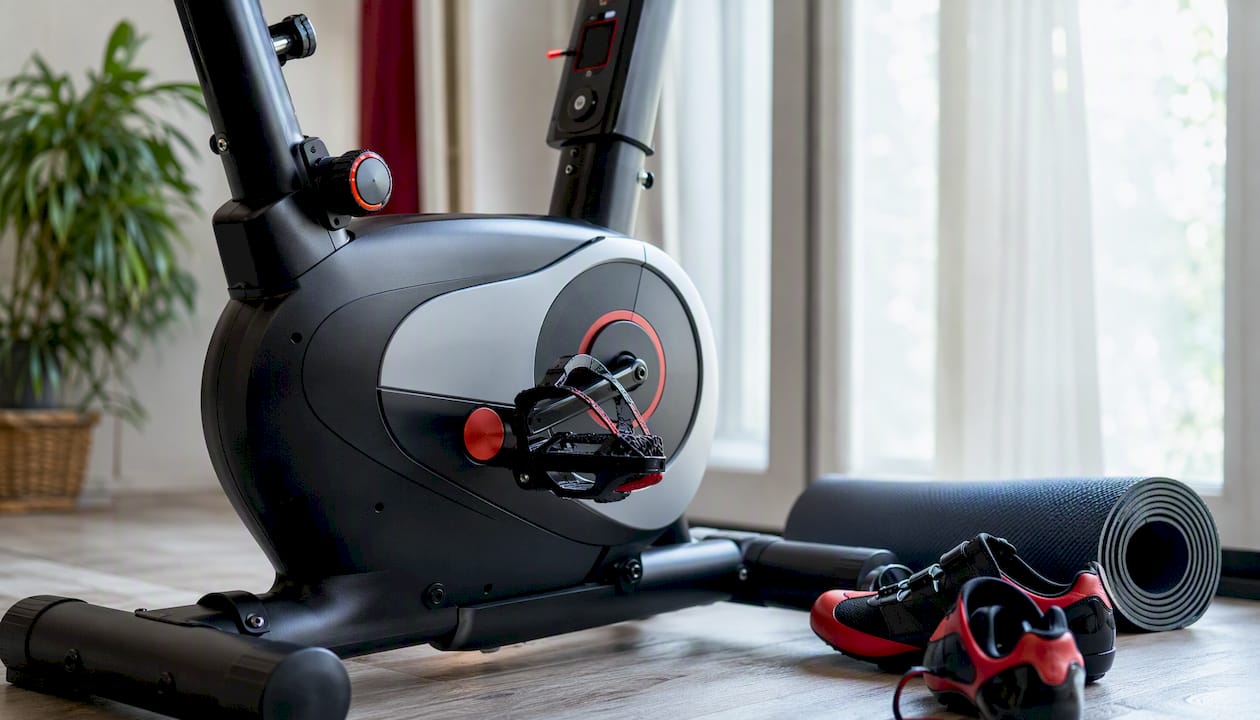
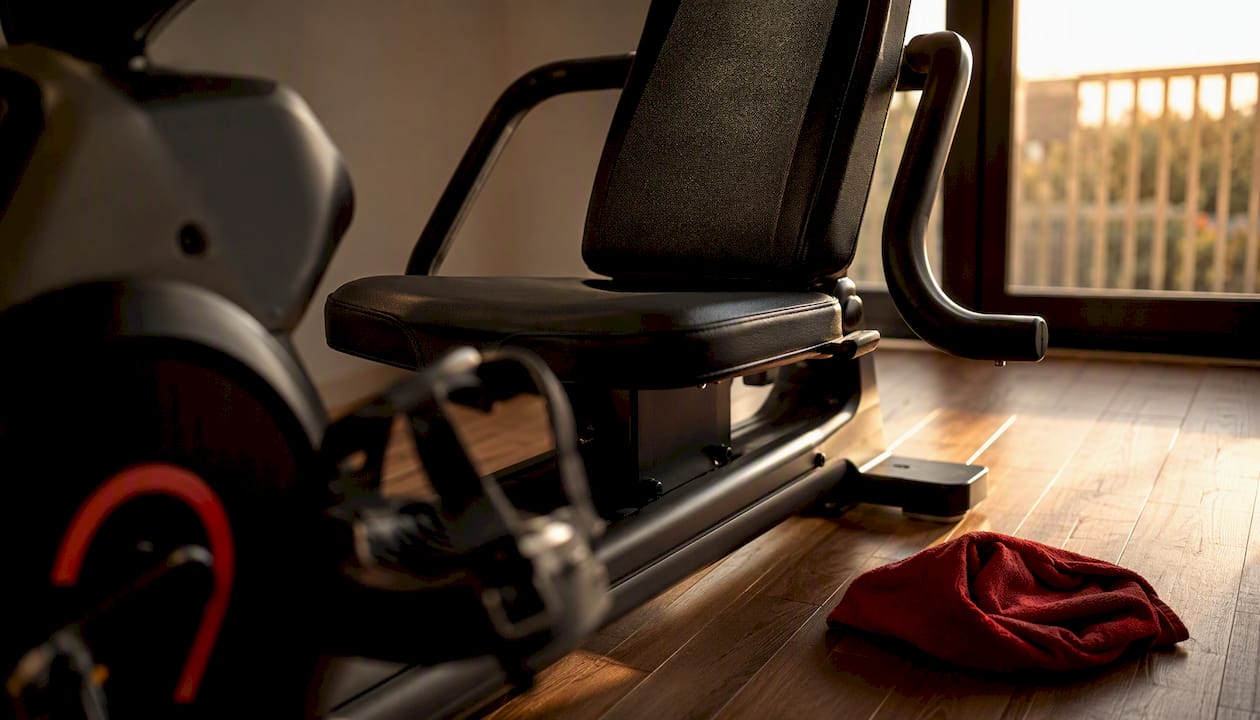
Recumbent Exercise Bike Reclined seat with backrest, pedals positioned forward. Reduces load on the spine and is particularly suitable for those with lower back problems or elderly users. Takes up more space in length than an upright bike.
Spin bike Robust structure, heavy flywheel (16–24 kg), friction or magnetic resistance. Replicates the feeling of a road bike, with the possibility of pedaling while standing. Ideal for high-intensity interval training (HIIT) and for those preparing for cycling races. To learn more about integrating high-intensity sessions, you can read the guide on spinning as aerobic training.
Folding Exercise Bike Folds in seconds and takes up the space of a medium suitcase. Light flywheel (4–8 kg), less rigid structure. Suitable for those who train 2–3 times a week with short sessions, not for intensive daily use.
Mini-bike (under-desk pedal exerciser) No supporting structure, used while sitting on a chair or sofa. Excellent for maintaining circulation during work, not for structured cardiovascular training.
Air Bike Resistance is generated by a fan: the harder you pedal, the greater the effort. Immediate and progressive response, but produces significant noise. Common in CrossFit environments.
Electromagnetic Exercise Bike Electronically controlled resistance, often with an integrated power meter. The most precise for those who want to monitor power output (watts) and follow structured programs. Higher price range.
| Type | Intensity | Comfort | Footprint | Suitable for |
|---|---|---|---|---|
| Upright | Medium | Medium | Small | General use, beginners |
| Recumbent | Low-medium | High | Large | Rehabilitation, elderly, lower back pain |
| Spin bike | High | Medium-low | Medium | Intensive training, cyclists |
| Folding | Low-medium | Medium | Minimal | Small spaces, occasional use |
| Mini-bike | Low | High | Minimal | Office, joint mobility |
| Air bike | High | Medium | Medium | CrossFit, athletes |
| Electromagnetic | High | High | Medium | Precise monitoring, pro use |
Technical features that determine pedaling quality and fluidity
The specifications you find in product descriptions are not all equally relevant. Three parameters truly make a difference in the daily experience.
The flywheel: weight and inertia
The flywheel accumulates kinetic energy during pedaling and releases it in the next cycle, making the movement fluid. A heavier flywheel provides a smoother ride, reducing jerks and the feeling of "empty" between pedal strokes. For general home use, 8 kg is the acceptable minimum; for intense sessions or spinning, aim for 16 kg or more. A model like the BRX 100 Ergo by Toorx clearly illustrates how flywheel specifications translate into concrete sensations during training.
Resistance systems compared
There are four main types of resistance, each with distinct characteristics:
- Mechanical pad (friction): a felt pad or shoe presses against the flywheel. Economical, but wears out over time and produces more noise. Common in entry-level spin bikes.
- Magnetic: magnets move closer to or further away from the flywheel without physical contact. Quiet, precise, virtually maintenance-free. The most common choice for quality home fitness.
- Electromagnetic: a variation of magnetic with electronic control. Allows for automatic programs and power measurement in watts. Requires electrical power.
- Air: resistance proportional to pedaling speed. No manual adjustment, immediate response, but noisy.
A tip: if you live in an apartment or share a home, magnetic resistance is almost always the most sensible choice: quiet and precise with no maintenance.
Transmission, capacity, and frame stability
Belt drive is quieter and requires less maintenance than a chain drive, which offers a more road-bike-like pedaling feel. For home fitness, a belt drive is preferable in most cases.
The manufacturer's stated maximum capacity must be respected: a frame sized for 100 kg used by a person weighing 95 kg always operates at its structural limit, accelerating wear. Always choose a model with a capacity at least 10–15 kg greater than your weight. The robustness of the frame, often made of painted steel or aluminum, directly affects stability during high-cadence sessions.
How to match the exercise bike to your training goal
Regular use of an exercise bike improves cardiovascular capacity, lower limb tone, and can contribute to weight loss when combined with adequate dietary control. But the right model changes radically depending on what you want to achieve.
- Weight loss: upright or recumbent with interval programs (HIIT or steady-state). Prioritize models with at least 8 resistance levels and heart rate monitoring.
- Post-operative or joint rehabilitation: recumbent, always after physiotherapist evaluation. The reclined posture reduces stress on knees and spine.
- Beginners: upright with magnetic resistance, simple console, and well-padded saddle. Avoid spin bikes in the first few weeks: the aggressive posture requires adaptation.
- Improve aerobic endurance: any type with progressively longer sessions (30–60 minutes) at moderate intensity (60–75% of maximum heart rate).
- Cycling preparation: spin bike with heavy flywheel, possibility to pedal standing, and, ideally, attachment for road bike cleats (SPD or compatible).
For those suffering from gonarthrosis (knee osteoarthritis), the exercise bike is often recommended by doctors because it reduces body weight, but resistance should be kept low in acute phases. With chronic low back pain, the recumbent is the safest choice. In both cases, have the training program adjusted by a specialist.
| Goal | Recommended type | Main reason |
|---|---|---|
| Weight loss | Upright or recumbent | Long sessions, sustained cardio |
| Rehabilitation | Recumbent | Lumbar support, low impact |
| Beginners | Magnetic upright | Simplicity, comfort, low cost |
| Aerobic endurance | Any | Progressiveness and consistency |
| Cycling preparation | Spin bike | Heavy flywheel, racing posture |
How to adjust the exercise bike for correct and efficient posture
Incorrect adjustment is the main cause of knee, back, and wrist pain during training. Follow these four steps in sequence.
- Saddle height: Standing next to the exercise bike, raise the saddle to hip height (iliac crest). When you get on, your knee should remain slightly bent (25–30°) at the lowest point of the pedal stroke. If your pelvis sways, the saddle is too high.
- Saddle depth (forward/backward): With the pedal in the horizontal position (3 o'clock), your knee should be directly above the pedal axle. Adjust the saddle forward or backward until this alignment is achieved.
- Handlebar height: For general use and beginners, the handlebars should be at the same height as the saddle or slightly higher, to reduce strain on the shoulders. For spin bikes and intensive training, they can be lowered by 2–4 cm for a more aerodynamic posture.
- Foot position on the pedal: The metatarsal (the wide part of the foot, just behind the toes) should be centered on the pedal axle. With SPD cleats, make sure the click is secure before starting.
After adjustment, check these points:
- No pain or excessive pressure on the knee during pedaling.
- Shoulders are relaxed, not raised towards the ears.
- Lower back is neither hyperflexed nor hyperlordotic.
- Arms are slightly bent, not straight.
To reduce saddle discomfort in the first few weeks, use padded shorts (bib shorts) and consider a gel saddle or an additional cover. 5-minute breaks every 30 minutes help with initial adaptation.
A tip: Mark the correct saddle and handlebar positions with a marker or tape the first time you find them. This will save you time at each session and maintain postural consistency over time.
How much space do you really need for an exercise bike?
The operational footprint (the space occupied during use) is always larger than the dimensions indicated in the product specifications, because it does not include the safety margin around the equipment.
- Recommended operational footprint: leave at least 50 cm free on each side and 100 cm behind the exercise bike to be able to get on and off safely.
- Storage footprint (fixed models): corresponds to the frame dimensions, typically 100–120 cm long and 50–60 cm wide for a standard upright bike.
- Folding models: once folded, they occupy about 50 x 40 cm at the base and can be leaned vertically against a wall. Convenient for studio apartments, but make sure the folding mechanism is sturdy and quick.
- Transport wheels: present on many fixed models, they allow you to move the exercise bike on smooth floors by slightly lifting the front side. Useful if you don't have a dedicated space.
Before purchasing, measure the available space and add safety margins. An exercise bike placed too close to a wall or furniture becomes uncomfortable to use and risks damage.
Console and connectivity: what do you really need to train?
A console with connectivity and guided programs is only useful if you intend to use apps or structured workouts; for basic use, a simple console is often more than enough. Connectivity is increasingly in demand, but data precision (watts, ergometry) often requires external sensors that are more accurate than integrated consoles.
The truly useful indicators on any console:
- Time and distance: to monitor session duration and volume.
- Heart rate: via handlebar sensors (less precise) or wireless chest strap (more reliable). A wireless heart rate strap like the Toorx one ensures more accurate data than contact sensors.
- Watt/ergometry: only present on electromagnetic models or those with dedicated sensors; essential for those following power-based training plans.
- Calories: an approximate estimate, useful as a relative reference but not as an absolute value.
When it's worth paying for Bluetooth/ANT+ and guided programs:
- You want to train with apps like Zwift, Kinomap, or Wahoo Fitness.
- You follow a structured plan with automatic resistance variations.
- You want to sync data with a smartwatch or tracking platform.
If, on the other hand, you train at a free pace without apps, a console with an LCD display showing time, speed, and heart rate is all you need. Spending more for connectivity without using it is one of the most common and least necessary compromises.
Noise, Maintenance, and Warranty: What to Check Before Buying
Noise is often underestimated during the purchase phase and becomes the primary reason for dissatisfaction, especially in apartments. The main sources are three: the flywheel, the transmission, and the braking/resistance system.
- Flywheel: a well-balanced flywheel with quality bearings is quiet. Vibrations or squeaks indicate wear or imprecise assembly.
- Belt drive: almost silent if tensioned correctly. The chain produces a rhythmic noise that increases with speed.
- Friction resistance: physical contact between the pad and the flywheel generates friction and noise, especially at high resistance levels.
Routine maintenance for an exercise bike is simple but must be performed regularly:
- Lubricate the chain (if present) every 2–3 months with specific chain oil.
- Check the belt tension every 6 months: it should be taut but not rigid.
- Check the tightening of pedals, saddle, and handlebars before every intense session.
- Clean the frame and flywheel with a damp cloth after each use to prevent corrosive sweat buildup.
- Unstabilized heart conditions or uncontrolled hypertension: intense aerobic activity may be contraindicated or require continuous medical monitoring.
- Acute phase of joint inflammation (rheumatoid arthritis flare-up, acute tendinitis): exercise during the acute phase can worsen the damage.
- Post-operative rehabilitation (knee or hip replacement, spinal surgery): the exercise bike is often part of the rehabilitation protocol, but parameters must be defined by the physiotherapist, not chosen independently.
- Acute herniated disc: the flexed posture of the upright exercise bike can increase disc pressure; the recumbent is generally more tolerated, but only after evaluation.
- First minute: saddle adjustment and comfort. Adjust the saddle and handlebars as described in the ergonomics section. Sit down and check that your posture is natural, without tension in your shoulders or back.
- Second and third minute: frame stability. Pedal at a moderate cadence, then gradually increase. Observe if the frame wobbles, if the non-slip feet grip the floor, and if you hear any abnormal vibrations.
- Fourth minute: progressive resistance. Set the resistance to 60–70% of the maximum available. The transition between levels should be smooth, without jerks or abrupt jumps.
- Fifth minute: noise test. Maintain a sustained cadence and listen. Squeaks, creaks, or rhythmic metallic noises are signs of insufficient construction quality or imprecise assembly.
- Console test: check that the display is readable from the pedaling position, that the buttons respond correctly, and that the heart rate is detected (if the sensor is present).
- Feeling of fluidity in the pedaling cycle (absence of "dead spots" or jerks).
- Lateral frame oscillations at high cadence.
- Abnormal heat in mechanical parts after 5 minutes.
- Perceived noise level at medium and high resistance.
- What is the warranty period for the frame and components?
- Are spare parts (saddle, pedals, belt) available and at what cost?
- Is assembly included or paid separately? How long does delivery take?
- Is there an in-home technical assistance service?
- Professional assembly: a correctly assembled exercise bike lasts longer and works better. Check if the retailer offers in-home service and at what cost.
- Delivery to floor: for equipment weighing 30–80 kg, delivery to the floor is a service worth explicitly requesting.
- Direct technical assistance: prefer retailers with their own technicians, not call centers that route requests to third parties with unpredictable timings.
- Availability of spare parts: saddle, pedals, belt, and bearings must be available for at least 5 years from purchase.
- What is the average response time in case of a fault?
- Is the cost of a technical service call fixed or variable?
- Are spare parts available in stock or do they need to be ordered?
- Qualescegliere
- How to choose an exercise bike for home | Bestandard
- Exercise bike: training guide and benefits | My-personaltrainer
- Home exercise bike: how to choose it? | TheWom Healthy
For the warranty, look for at least 2 years on the frame and 1 year on mechanical components for domestic use. Verify that the manufacturer or retailer offers direct technical assistance (not just a toll-free number that refers to third parties) and availability of spare parts for at least 5 years. Equipment without available spare parts becomes unusable after the first breakdown.
How Much Does a Quality Exercise Bike Cost? The Three Market Segments
Frequency of use is the parameter that should guide the choice of price range: occasional, regular, and intensive use require very different levels of robustness and warranty.
Entry-level range (under €300) Light flywheel (4–8 kg), thin steel frame, basic mechanical or magnetic resistance. Suitable for those who train 1–2 times a week with short sessions. Typical compromises: thinly padded saddle, essential console, lower maximum capacity, limited durability with intensive use.
Mid-range (300–700 €) Flywheel from 8–16 kg, magnetic resistance with 8–16 levels, console with Bluetooth or ANT+, more robust frame and capacity up to 120–130 kg. The sweet spot for those who train 3–5 times a week. Here you will find models with the best performance-to-cost ratio for home fitness.
High-end (over €700) Flywheel from 16 kg upwards, electromagnetic resistance with wattmeter, advanced connectivity, touchscreen display, compatibility with major training apps. Justified for intensive daily use, heavy users, or those who want a training experience comparable to that of a professional gym.
Spending more makes concrete sense when: you train more than 5 hours a week, your weight exceeds 90 kg, you want automatic programs or app connectivity, or you anticipate shared family use with different needs.
Contraindications and When to Consult a Doctor or Physiotherapist
The exercise bike is one of the cardio machines with the lowest joint impact, but it is not without contraindications. Some conditions require professional evaluation before starting.
For those with rehabilitation goals, consulting a physiotherapist is not just for choosing the right model: it is for defining resistance levels, session duration, and alarm signals to monitor. A well-chosen but poorly used piece of equipment does not bring results and can cause damage.
This article provides general information for guidance purposes. For specific medical conditions, always consult your doctor or a physiotherapist before starting any training program.
How to Test an Exercise Bike in a Store: Practical 5-Step Checklist
A time-boxed test of 5–10 minutes in the store allows you to evaluate the saddle, pedaling fluidity, stability, and noise before purchasing. Follow this sequence:
What to note during the test:
Questions to ask the seller before completing the purchase:
A tip: if you buy online without the possibility of testing, look for models with an extended return policy (at least 30 days) and read verified reviews, focusing on comments after 3–6 months of use, not just first impressions.
After-Sales Services: What to Evaluate and How Teknofitness Can Help You
Purchasing an exercise bike is just the first step. After-sales services often determine the difference between equipment that lasts for years and equipment that becomes an expensive clothes hanger.
The services that truly make a difference:
Questions to ask before purchasing:
Teknofitness has its own warehouse, which means direct control over quality and delivery times. Assistance is managed internally, without external call centers, with over 1,000 positive reviews testifying to the continuity of service. Assembly is available as a paid service, useful for those who do not want to risk assembly errors on complex equipment.
A tip: before purchasing online, always verify that the retailer has a direct phone number and a verifiable physical address. This is the most reliable sign that after-sales support truly exists.
Quality or Savings? The Perspective of an Industry Expert
There's a common belief that an entry-level exercise bike is sufficient to "see if you like it" before investing more. In theory, that makes sense; in practice, it's often the most expensive way to get into home fitness.
A piece of equipment with a 4 kg flywheel and mechanical resistance produces an inconsistent pedaling experience that discourages regular use long before the initial enthusiasm wanes. The problem isn't motivation: it's that pedaling on equipment that vibrates and creaks is objectively less pleasant, and the body registers it. Those who abandon their exercise bike after three months often haven't lost the desire to train: they bought the wrong tool.
The threshold beyond which construction quality makes a noticeable difference is around €350–€400, where you find 8–10 kg flywheels, magnetic resistance, and frames rigid enough for daily sessions. If you train more than 5 hours a week, or if your weight exceeds 90 kg, that threshold rises to €600 or more. This isn't a luxury: it's the condition for the equipment to last and for your training to be effective.
For those still undecided between models, the most practical advice is this: choose the model with the heaviest flywheel your budget allows, in the type suitable for your goal. The flywheel is the component that, more than any other, determines the pedaling sensation, and it cannot be upgraded after purchase.
Teknofitness: Consulting, Assembly, and Assistance for Your Exercise Bike
Choosing the right exercise bike is a process that requires attention to technical details, and having a reliable partner by your side makes the difference between a satisfactory purchase and one that generates regret.
Teknofitness offers personalized pre-purchase consultation, without call centers: you speak directly with those who know the products. Our own warehouse guarantees real availability and certain delivery times, with home assembly service for those who prefer to rely on professionals. To complete your setup, a Toorx wireless heart rate strap allows you to monitor your heart rate with superior precision compared to integrated sensors. To navigate the entire range of available cardio equipment, visit Teknofitness and request direct consultation: you will find the right model for your goal, with guaranteed technical assistance over time.